For many commercial facilities, service every three to four months can be a useful starting point, with additional seasonal checks depending on equipment type, usage, and operating conditions. Skipping scheduled maintenance can allow wear or performance issues to go unnoticed and may increase the risk of unexpected repairs. Understanding commercial HVAC maintenance frequency helps facility managers plan budgets, reduce the risk of emergency repair calls, and support more consistent comfort throughout the year.
Comfort Plus LLC tailors the program according to the particular building’s equipment, use, and budget constraints. For inspections and system replacements alike, our team is ready to assist your facility in Maryland, Northern Virginia, and D.C.
What Shapes a Commercial HVAC Service Plan
A commercial building rarely runs its HVAC equipment the same way a house does. Office towers, medical buildings, schools, warehouses, and multi-tenant properties all place different demands on rooftop units, chillers, and air handlers, so a single fixed interval does not fit every property equally well. Building size, occupancy hours, equipment age, tenant complaints, and how hard the system works during a typical week all factor into how often service should happen, and a property with several rooftop units running long hours will usually need closer attention than a small office with light use.
Facility managers who track these variables tend to build a more reliable HVAC maintenance schedule rather than reacting after something breaks. A schedule that accounts for run hours, past repair history, equipment condition, and manufacturer recommendations gives a maintenance provider the context needed to prioritize inspections, catch early wear, and plan repairs before issues contribute to costly downtime.
Over time, this kind of planning also makes budgeting easier, since facility teams can anticipate service costs instead of absorbing surprise repair bills that show up without warning halfway through a fiscal year.
Many facilities also factor in local code requirements and insurance guidelines, since some jurisdictions and insurers expect documented maintenance records for commercial equipment. Keeping a written history of past visits, filter changes, and repairs makes it easier to satisfy these requirements. It can also support decisions about when a unit is approaching the end of its useful service life.
Request a maintenance quote to start building a service plan around your facility’s equipment and schedule.
Why Seasonal Timing Matters for Commercial Systems
Heating and cooling equipment work through very different conditions depending on the time of year, and each season puts stress on different components. Cooling systems work hardest through the summer months, while heating equipment carries the load once temperatures drop. Hence, a maintenance visit timed just before each season change gives technicians a chance to catch issues before they affect comfort or output.
Many facility managers build a seasonal commercial HVAC maintenance plan that shifts inspection priorities between the spring and fall, checking refrigerant levels, condenser coils, and economizer operation ahead of summer, then reviewing heat exchangers, burners, and airflow before winter. This approach spreads maintenance tasks across the year instead of concentrating everything into one rushed visit, and it also gives a facility team more predictable scheduling since each visit has a clear seasonal purpose.
Shoulder seasons, when a building typically uses less heating and cooling overall, still offer a useful window for inspections since equipment is not running at full capacity. Technicians can often complete a more thorough check during these lower-demand periods without disrupting comfort for tenants or building occupants.
How Often Should Commercial HVAC Systems Be Serviced?
For many commercial buildings, quarterly HVAC service can serve as a starting point for an HVAC maintenance schedule, with the final frequency based on equipment, operating hours, condition, and manufacturer recommendations. This interval can help identify issues such as loose belts, dirty filters, or refrigerant leaks before they contribute to larger operational problems.
That said, quarterly service is a starting point rather than a fixed rule for every building. Facilities running equipment nearly around the clock, such as data centers or medical buildings, may benefit from more frequent checks, while a lightly used storage building may require less frequent service. A maintenance provider who reviews a building’s actual usage, equipment count, and repair history can recommend an interval that fits the property rather than applying a generic industry average.
Does Equipment Type Affect Maintenance Frequency?
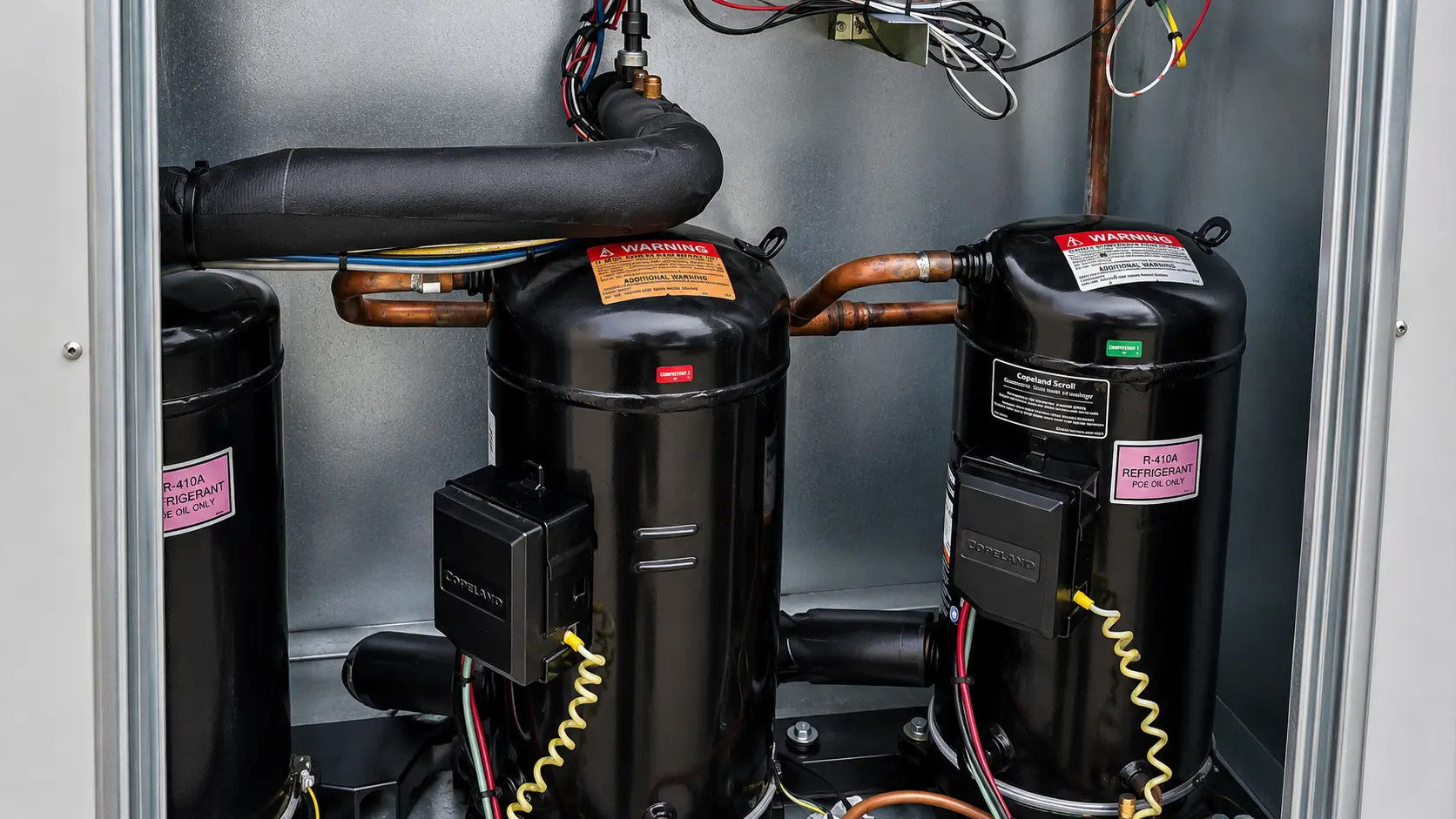
Yes, the type of equipment installed has a direct effect on how often it needs attention. Packaged rooftop units, split systems, chillers, and specialized equipment such as AAON units each have different moving parts, refrigerant requirements, and manufacturer service recommendations, so a facility running a mix of equipment types often needs a maintenance plan that treats each system differently rather than applying one interval across the board. Older equipment nearing the end of its expected service life also tends to need closer attention than a recently installed system still under warranty.
Controls also play a role in how a maintenance plan is built. Buildings tied into a building automation system, or BAS, may need controls reviewed alongside mechanical components, since scheduling errors, sensor drift, or outdated sequences can affect performance even when the mechanical equipment itself is running fine.
Warranty terms can tie back to equipment type as well, since some manufacturer warranties may include documented maintenance requirements. Skipping a required visit on covered equipment can create complications later if a major component fails and the manufacturer asks for service records that were never kept.
Recognizing When a Tune-Up Can’t Wait
Even with a maintenance plan in place, certain warning signs point to a need for service sooner than scheduled. Uneven temperatures between rooms, short-cycling equipment, rising utility bills without a clear cause, and unusual noises from rooftop or mechanical room equipment can indicate that the system should be inspected sooner than scheduled, and each one is worth a call rather than waiting for the next routine visit.
When these signs appear, it may make sense to schedule service sooner rather than waiting for the next routine visit and to adjust the commercial AC tune-up frequency if recurring issues develop. Older units, systems that have already had repairs, and equipment nearing the end of its expected lifespan generally benefit from closer attention until a repair or replacement decision is made.
A facility team that tracks these signs over time, rather than treating each one as an isolated event, often spots patterns that point to a specific unit needing extra attention rather than a building-wide problem. That kind of pattern recognition is harder to build without consistent visit records to compare against.
Working with a Maintenance Partner You Can Trust
A preventive maintenance schedule should account for commercial equipment requirements and include clear communication of inspection findings. We build our preventive maintenance using a flexible schedule that allows for the development of plans according to the equipment available in the facility, access issues, and budget. Technicians write down what they find during each maintenance session.
Beyond routine visits, the same team handles diagnostics, repairs, system replacements, installation, turnkey projects, and emergency service when equipment fails outside of a scheduled visit. That range of support means facility managers working with one provider can move from a maintenance finding straight into a repair or replacement conversation without bringing in a separate contractor for every step, which can simplify coordination.
This kind of continuity also helps when a facility team changes staff, since a consistent maintenance history stays with the provider rather than living in someone’s personal notes or getting lost during a transition between employees.
Setting the Right Commercial HVAC Maintenance Frequency for Your Facility
The right commercial HVAC maintenance frequency varies by facility. Quarterly service can be a useful starting point for some commercial buildings, but equipment type, operating hours, age, condition, manufacturer recommendations, and seasonal demand should guide the final schedule. Reviewing the plan as equipment and facility conditions change can help keep maintenance planning realistic.
Comfort Plus LLC works with commercial and institutional facilities across Maryland, Northern Virginia, and D.C. to build maintenance programs suited to their equipment and operating needs, backed by hands-on experience across a wide range of commercial systems and controls.
FAQs:
1. What happens if a commercial HVAC system misses a scheduled maintenance visit?
A missed visit doesn’t necessarily cause immediate failure, but issues like dirty coils or loose electrical connections may continue unnoticed. Delaying inspection can allow some problems to worsen before the next scheduled visit.
2. Can preventive maintenance actually lower monthly utility bills?
Proper maintenance can support efficient system operation by addressing issues such as dirty coils, worn components, airflow problems, or refrigerant-related concerns. Actual results depend on the condition of the equipment and other operating factors.
3. How does building automation impact the frequency of service of the system?
A BAS adds scheduling, sensors, programming, and controls to the mechanical equipment, so maintenance may include reviewing controls as well as mechanical components. If the controls are outdated or configured incorrectly, system performance can be affected even when the mechanical equipment itself is operating.
4. Should older commercial HVAC equipment be maintained more frequently than newly installed systems?
Older equipment may benefit from closer attention as components wear and repair needs increase. Shorter maintenance intervals can help identify developing issues earlier.
5. What should a facility manager document after each maintenance visit?
A useful record includes what was inspected, any parts replaced, readings taken during the visit, and recommendations for future repairs. Keeping this history makes it easier to track a piece of equipment’s condition over time and plan budgets for eventual replacement.