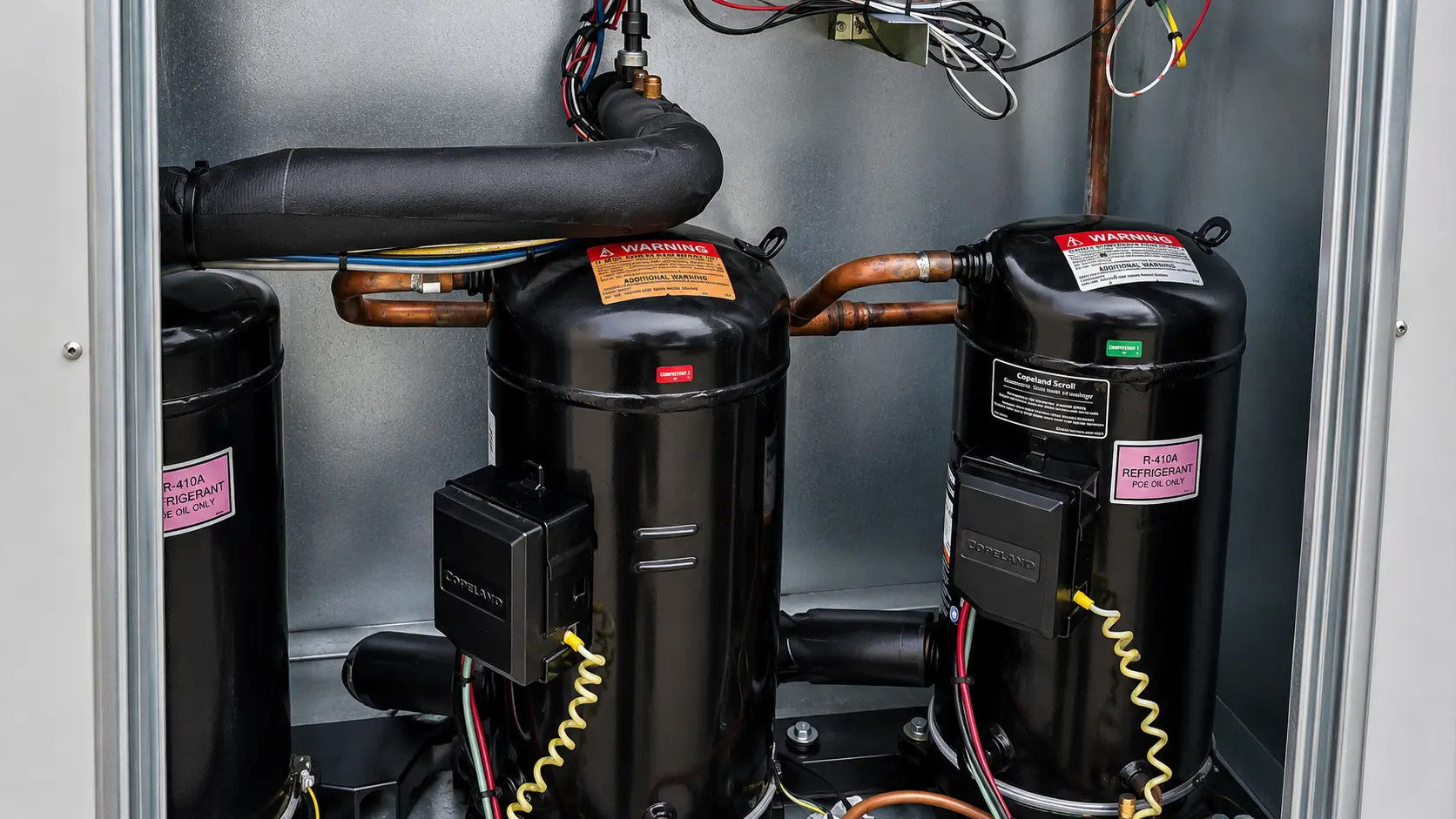
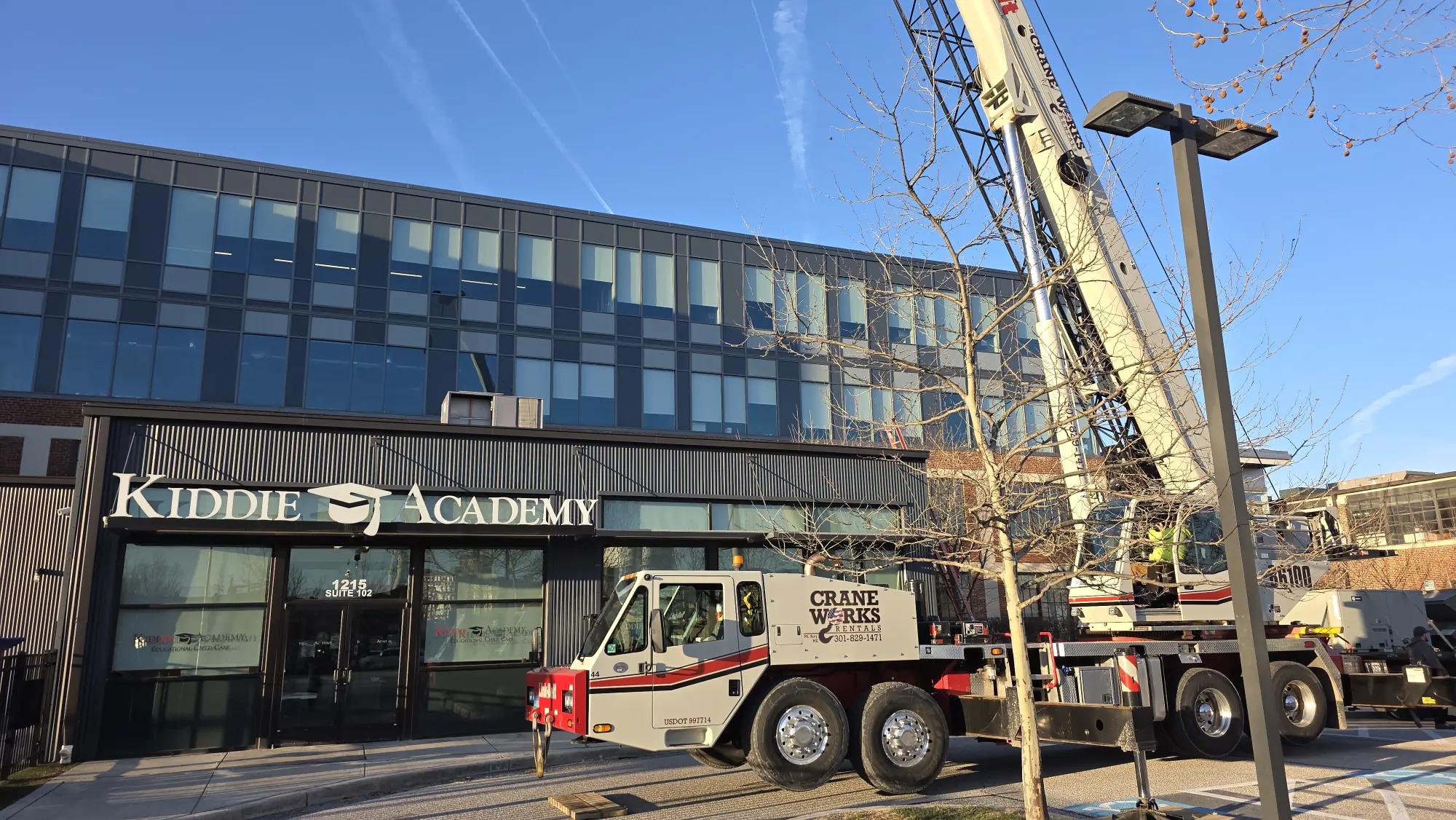
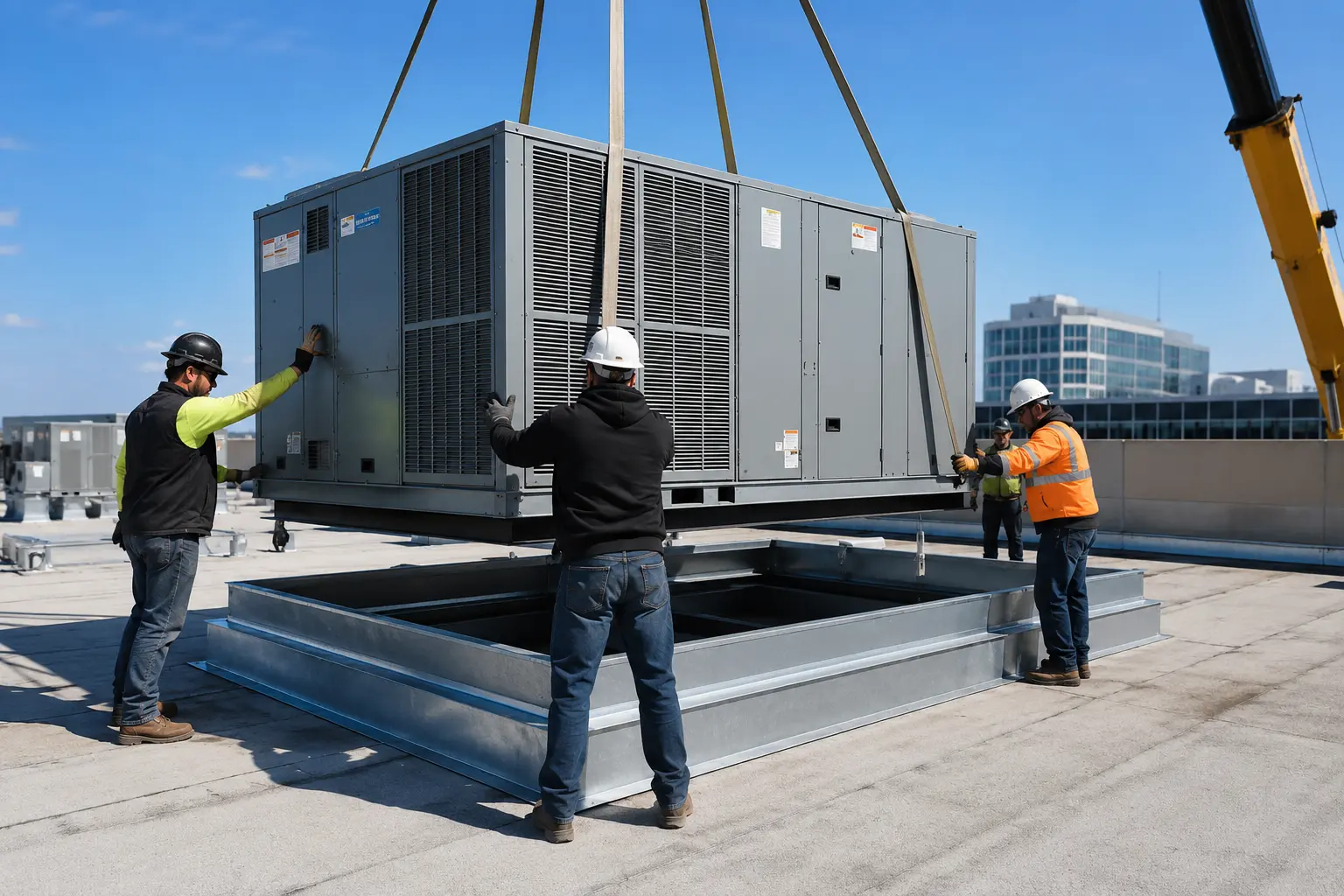
In case of loss of either cooling or heating in a warehouse, hospital department, or data center, typical repair plans will be too slow to address the problem. After all, the loss of equipment does not care about working hours, and therefore, it demands a prompt response. It is in situations where an emergency commercial HVAC service comes into play.
Comfort Plus LLC serves warehouses, institutions, and specialized facilities in Maryland, Northern Virginia, and DC that can afford no interruptions in their work. Whatever the cause of the malfunction, whether it is a breakdown of the unit, a control system problem, or an entire system shutdown, we are here to help you out.
Why It Is More Difficult to Handle Downtime in Warehouses and Institutions
Warehouses, educational buildings, medical buildings, and specialized facilities have less wiggle room compared to the regular office environment. Slight variations in temperature will impact stored stock, sensitive equipment, or the comfort of individuals who cannot walk out of the building. HVAC downtime in such facilities means that operations become disrupted fast. Production gets delayed while employees have difficulties keeping premises comfortable.
This is the reason why managers of these types of facilities should not handle HVAC downtime in the same way as smaller offices. A rooftop unit failing at a warehouse can cause not only inconvenience but also disrupt production schedules, make it harder to guarantee the safety of the staff, and damage stock within the first day. Such institutions like schools and governmental buildings are under the same pressure and increasingly seek to establish cooperation with commercial HVAC emergency services prior to HVAC system failure.
Having equipment problems or discomfort problems in your facility? Call Comfort Plus LLC now and let us diagnose your problem.
What Is the Impact on a Facility’s Operations if Its HVAC Fails at Nighttime?
Equipment does not break down at a certain time, and most of the failures for commercial HVAC systems occur outside regular working hours: nighttime, weekends, or during the holidays. This is exactly what differentiates after-hours HVAC services from other maintenance services. Those companies that work day and night, as well as those that are unable to wait until the next Monday, require a supplier that will fix any problem at the moment of its occurrence.
In case such coverage is not provided, then a simple problem, such as the compressor tripping or control board failure, may result in a multi-day shutdown. Facilities that are very sensitive to temperature and air regulation conditions, including warehouses, server rooms, and medical institutions, are very vulnerable to such circumstances.
Detecting Issues Before It’s Too Late
The vast majority of problems with HVAC systems rarely come from a sudden failure. In most cases, the problem starts with a minor issue such as loss of communication, an incorrect reading from a sensor, or a sequence that fails to function as it should according to its original programming. At this stage, HVAC controls troubleshooting plays a vital role, as early detection of the root cause of the problem can prevent emergency shutdowns in the future.
In buildings where a BAS (building automation system) is installed, all activities related to controlling equipment and scheduling are performed by this system. In case communication between components is interrupted, BAS controls and emergency support are needed to restore control of the situation.
When Should Facility Managers Know It Is an Emergency Situation?
Not all repairs to the HVAC systems require emergency treatment, but some repairs definitely are emergencies. The inability of heating or cooling to provide heat or air conditioning for occupied premises, the failure of control systems throughout an entire facility, or any malfunctioning equipment that poses a hazard for those using the premises are emergencies. For these cases, it is more appropriate to seek help from emergency commercial HVAC services rather than schedule maintenance work.
Facility managers who are prepared and have planned for emergency HVAC repair in Maryland and the surrounding area find themselves in a better position because they are familiar with the professionals they should contact. This helps them gain invaluable time once their systems break down.
The Importance of Regional Response for Specialty Facilities
Each type of facility comes with its own configuration, layout, and operational requirements. A provider with a defined regional operation will be able to arrive sooner and will already have knowledge of the type of equipment used in that specific region, rather than having to learn about it only upon receiving the call.
We at Comfort Plus provide commercial HVAC services that DC NOVA facilities need for that very reason. Knowing about local facility types, equipment manufacturers, and regional operational conditions will help to diagnose the problem more quickly after arriving at the scene, especially in case of lost operating time.
What Information Does Your Facility Need in Its HVAC Emergency Response Plan?
The first step to crafting a useful emergency response plan is identifying which of the equipment is critical and which can wait a few minutes until it is addressed. Facilities should have basic information about their equipment, its history, and contacts for emergencies; an emergency commercial HVAC service will not come to the facility without prior experience with the system.
One more tip is to review the plan from time to time since the equipment ages and the needs of the building might change. What was a viable emergency HVAC plan two years ago might be out-of-date today, taking into account any additional equipment and changes in the system.
Preparation before Requesting Emergency Services
The process will be quicker if the facility has a bit of information before making the request. The information should include the location of the facility, the type of equipment in fault, changes prior to the malfunction, a total outage of the system, and any alarm or error message.
Entry into the facility becomes very important too, especially in cases of warehouses or large campus settings with various entry points and security procedures during off hours. If the facility provides this information initially, the visit will be quick since a lot of time will be saved to solve the problem rather than looking for the source of the problem.
Lower the Chances of HVAC Emergencies in the Future
Not all emergencies in commercial HVAC systems can be prevented, but constant checking can reduce the likelihood of failures. The facility manager should pay close attention to recurring problems, atypical behavior of equipment, alerts from the control system, and temperature fluctuations occurring more often than usual.
In addition, monitoring maintenance activity can provide information on the development of potential risks. In case there is a recurring problem, it will be worth carrying out HVAC troubleshooting or equipment checks to detect the root of the problem and eliminate it.
Choose a Reliable Commercial HVAC Service Provider
When selecting a provider before experiencing an HVAC malfunction, facility managers will have the opportunity to select a provider based on certain criteria. Facility managers should find a provider that has experience dealing with commercial HVAC units, HVAC controls, and commercial warehouses and institutions.
The other aspect to consider during the process is to ensure that the provider is equipped with the necessary knowledge to provide emergency HVAC service. This becomes important for businesses and institutions in Maryland, Northern Virginia, and the DC region.
Running Warehouses, Institutional Buildings, and Specialty Facilities in Spite of the Unanticipated
Since urgent equipment problems seldom show up on anyone’s convenient schedule, it should be obvious how important an efficient system of handling such problems becomes in terms of facilities like warehouses, institutional buildings, and specialty facilities. An effective system means spending less time waiting and more time fixing any problem and returning to business as usual.
An effective emergency commercial HVAC service provider should be one that has the experience of working with various kinds of facilities, including warehouses, educational facilities, healthcare facilities, and specialty facilities, because a large number of problems encountered have likely been met before.
FAQs:
1. What counts as an emergency HVAC issue for a warehouse or institution?
An emergency HVAC issue typically means a complete loss of heating or cooling in an occupied or temperature-sensitive space, a controls failure affecting the entire building, or any equipment problem that creates a safety risk. Minor issues like unusual noise or a slight temperature drift usually don’t require the same urgency, though they’re still worth checking before they grow into bigger problems.
2. How do commercial facilities handle HVAC system shutdowns without stopping operations completely?
Many facilities keep a basic backup plan that includes zoned shutoffs, rerouting airflow to critical areas, or temporarily relocating sensitive equipment while repairs are underway. Having accurate building and equipment documentation on hand also helps a technician isolate the problem faster, which shortens how long operations are affected.
3. How fast can a technician usually respond to an emergency HVAC call?
Response times vary by provider, location, and current workload, so it’s worth asking a potential provider directly about their typical after-hours availability before an emergency happens. Facilities that already have a working relationship with a commercial HVAC provider often see faster response, since the technician arrives with some knowledge of the site already.
4. Can problems with the building automation system actually lead to an HVAC emergency?
Yes, because a problem with controls can turn off equipment, read incorrect temperature readings, or stop the schedule from operating properly while the actual equipment operates perfectly. Since there are often no immediate indications that there is a problem with controls, the problem is initially assumed to be equipment failure until a technician examines the wiring, programming, and sensors.
5. What information does a facility manager need to have on hand prior to requesting an HVAC emergency repair?
The make and model of the equipment, along with its approximate age, and also a brief description of the problem and how long it’s been occurring would be beneficial in preparation for the visit from the technician.